
Building Balanced Meals for Sustainable Weight Management
Managing weight is easier when meals are balanced, satisfying, and practical for everyday life. Rather than chasing restrictive diets, aim to build plates that combine protein, fiber-rich carbohydrates, healthy fats, and non-starchy vegetables. This approach supports appetite control, nutrient adequacy, and steady energy—key ingredients for sustainable weight management.
Why balance matters more than restriction
Calories determine weight change, but food composition affects hunger, energy, and how easy it is to stick with a plan. Protein and fiber increase fullness, fats slow digestion and add satisfaction, and vegetables provide volume for fewer calories. Combining these elements helps reduce overall calorie intake without feeling deprived.
Tips:
- Prioritize whole foods over highly processed options.
- Include a source of protein at every meal to support satiety.
- Favor fiber-rich carbs (whole grains, legumes, fruits) instead of refined grains.
The practical plate: a simple template
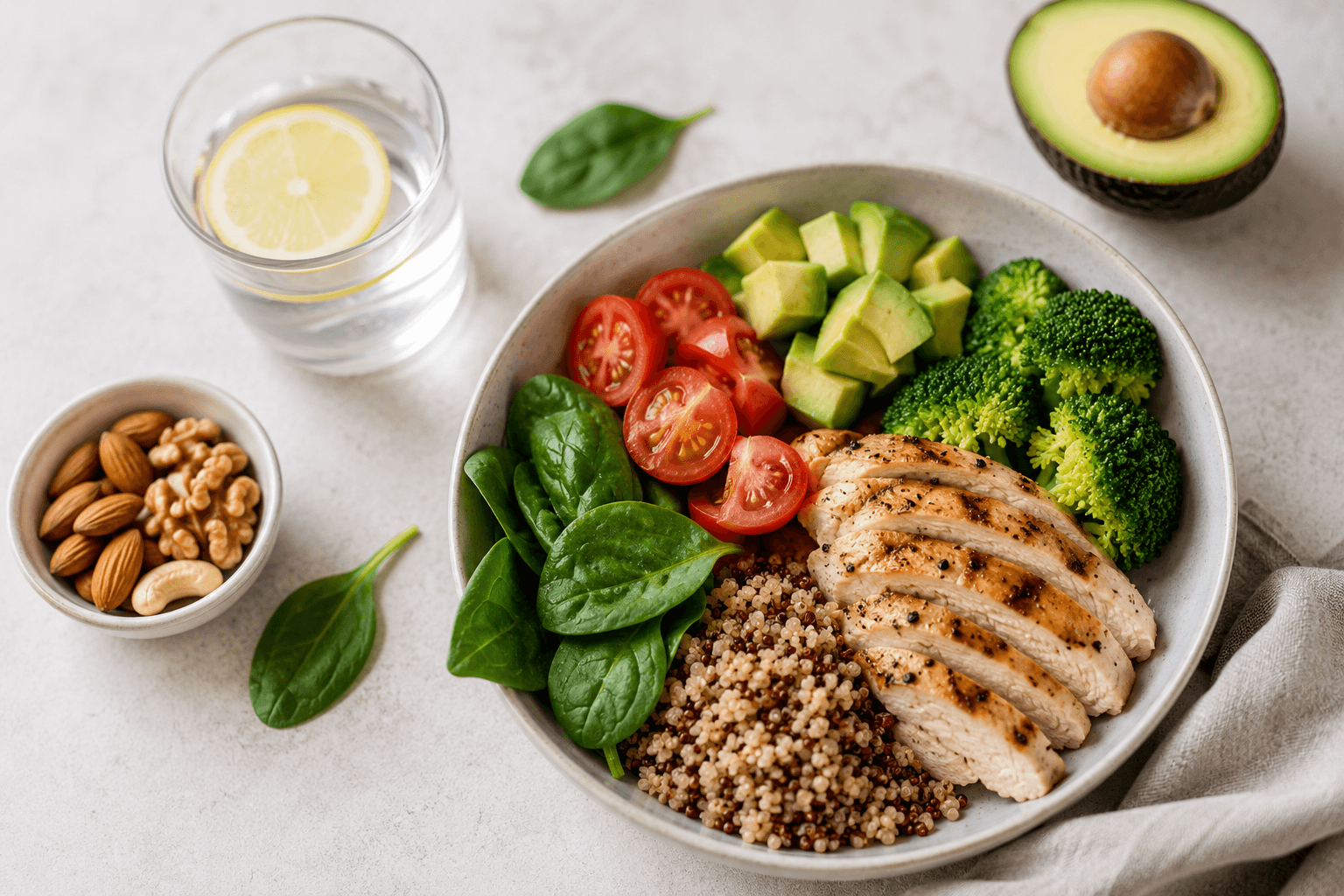
Use this flexible plate model to compose meals at home or on the go:
- 1/4 plate = Lean protein (poultry, fish, tofu, legumes, eggs)
- 1/4 plate = Fiber-rich carbohydrate (brown rice, quinoa, sweet potato, beans)
- 1/2 plate = Non-starchy vegetables (leafy greens, broccoli, peppers, tomatoes)
- 1–2 tablespoons = Healthy fat (olive oil, avocado, nuts)
This visual ratio helps control portions while ensuring nutrient variety. For lower-calorie meals, increase the vegetable portion further and reduce the carbohydrate portion slightly.
Choosing and portioning protein
Why protein helps: it has a high satiety effect and a higher thermic effect (the energy used to digest it) than carbs or fat. Protein also helps preserve lean mass when you reduce calories.
Practical choices and portions:
- Animal: 3–4 oz cooked chicken, turkey, fish, or lean beef (about the size of a palm).
- Plant: 1 cup cooked beans or lentils, 1 cup tofu, or a combination of legumes and whole grains.
- Eggs: 2 large eggs for breakfast or as part of a meal.
Include protein at snacks too—Greek yogurt, cottage cheese, a small handful of nuts with fruit, or hummus with vegetables help curb hunger between meals.
Smart carbohydrate choices
All carbohydrates aren’t equal when it comes to appetite and nutrient density. Favor carbohydrates that provide fiber, vitamins, and minerals.
Good options:
- Whole grains: brown rice, quinoa, barley, steel-cut oats.
- Starchy vegetables: sweet potatoes, winter squash.
- Legumes: beans, chickpeas, lentils.
- Fruit: whole fruit rather than juice for fiber and slower absorption.
Portion cues: a fist-sized serving (roughly 1 cup cooked) is a practical starting point for many adults; adjust down if you’re reducing calories or up if you have higher energy needs.
Healthy fats: quality over quantity
Fats are calorie-dense but essential for nutrient absorption and satisfaction. Focus on unsaturated fats and be mindful of portion sizes.
Good sources:
- Olive or avocado oil for cooking or dressings (1 tablespoon)
- Avocado (1/4–1/2 medium)
- Nuts and seeds (a small handful, about 1 oz)
- Fatty fish (salmon, mackerel) for omega-3s
Using fats to add flavor—drizzling oil or adding nuts—can make meals more satisfying and help you feel full on fewer calories.
Vegetables: volume, nutrients, and variety
Non-starchy vegetables are low in calories and high in volume, making them excellent for weight management. Aim to fill half your plate with them.
Ways to include more:
- Raw salads with mixed greens, cucumber, tomatoes, and grated carrots.
- Roasted vegetable trays (broccoli, cauliflower, bell peppers) — roast in bulk to save time.
- Stir-fries with a large proportion of vegetables and a lean protein.
Frozen vegetables are a convenient, nutrient-preserving option when fresh produce isn’t available.
Meal timing and frequency: what science says
There’s no single correct schedule for everyone. Regular meals can prevent extreme hunger and overeating, but some people do well with fewer, larger meals. Choose a pattern that fits your life and helps you avoid unplanned, high-calorie choices.
Practical suggestions:
- Aim for 3 balanced meals per day with optional protein-rich snacks if you’re hungry.
- If you skip meals and become overly hungry, consider smaller, more frequent meals to prevent overeating later.
Mindful eating and small habit changes
Behavioral habits matter. Mindful eating—slowing down, eliminating distractions, and paying attention to hunger and fullness—helps you notice satisfaction earlier and reduces the chance of eating past fullness.
Simple habits to try:
- Put utensils down between bites and chew thoroughly.
- Eat without screens at least part of the time.
- Pre-portion snacks instead of eating from large packages.
Tracking without obsessing
If you’re using calorie or macronutrient tracking tools, focus on patterns rather than daily perfection. Track for a few days to learn portion sizes and then use those learnings to guide regular meals. Consider tracking only certain meals or days to avoid burnout.
Example balanced meals
- Breakfast: Greek yogurt with berries, a sprinkle of oats, and a few chopped almonds.
- Lunch: Grilled chicken, quinoa, mixed greens, roasted vegetables, and a lemon-olive oil dressing.
- Dinner: Baked salmon, a small baked sweet potato, and a large steamed broccoli and spinach salad.
- Snack: Apple with 1 tablespoon peanut butter or carrot sticks with hummus.
Final practical checklist
- Include protein, fiber-rich carbs, healthy fat, and vegetables at main meals.
- Use the 1/2 veg, 1/4 protein, 1/4 carb plate template as a guide.
- Cook in batches and keep easy, healthy options on hand.
- Practice mindful eating and reasonable portioning of calorie-dense foods.
- Track patterns, not perfection; adapt portions to your hunger and activity level.
Balanced meals won’t eliminate the need to manage total calories for weight change, but they make it easier to feel satisfied and stick with a plan. Small, consistent changes to how you compose meals often produce the most sustainable results.
Note: This article provides general guidance. For personalized nutrition advice, consult a registered dietitian or healthcare professional.