
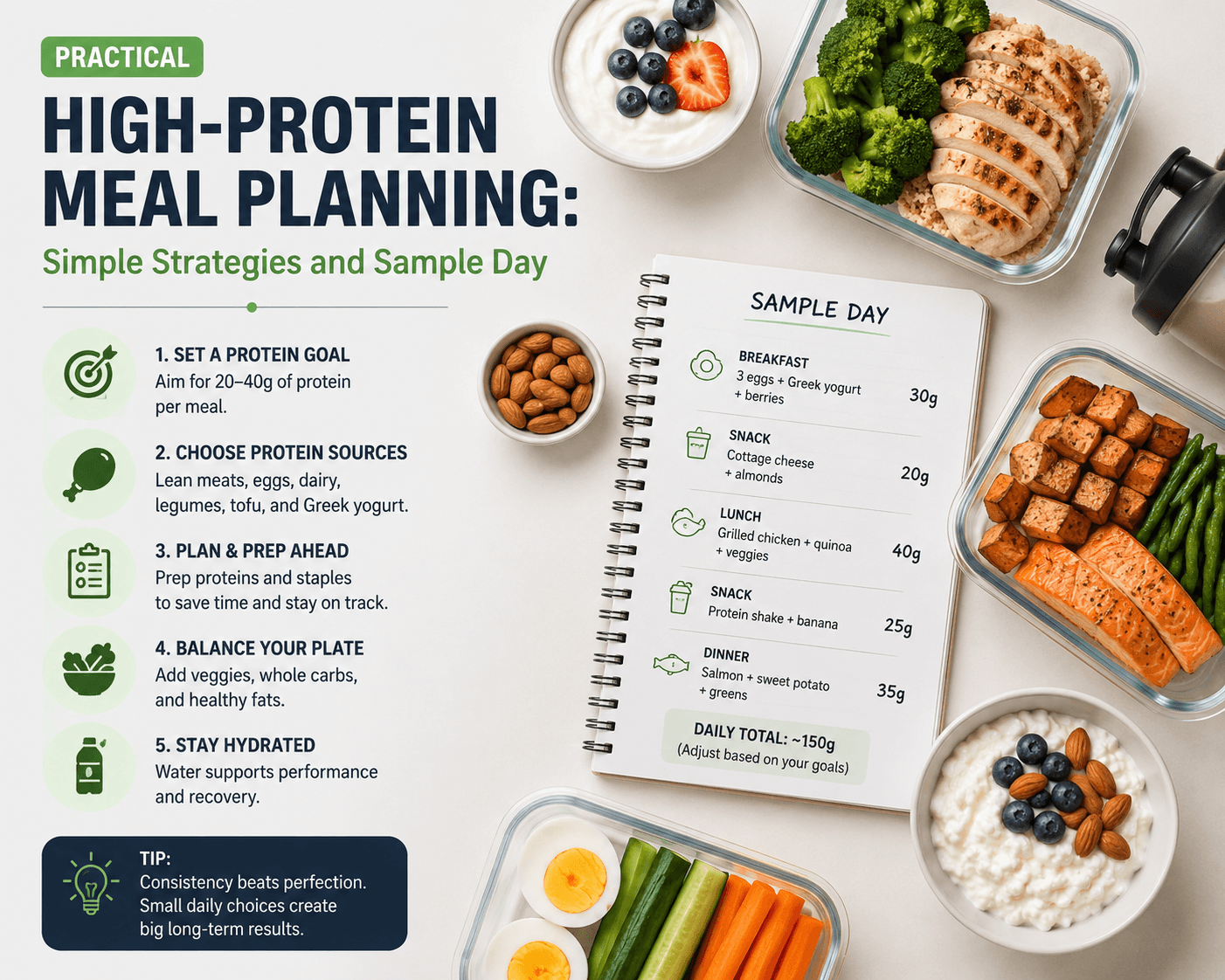
Why Plan for More Protein?
Protein supports muscle maintenance, satiety, and everyday repair processes. Whether your goal is to feel fuller between meals, support workouts, or simply eat more nutrient-dense meals, a little planning makes high-protein eating realistic and affordable. This guide gives evidence-aware, practical strategies and a sample day to help you build consistent high-protein meals.
How Much Protein to Aim For (Practical Ranges)
Individual needs vary by body size, activity, age, and goals. For most adults, a useful practical range to plan around is:
- Moderate intake: 0.8–1.0 g per kg body weight per day
- Higher intake for active people or those preserving muscle: 1.2–2.0 g per kg per day
You don’t need to nail a precise number every day. Instead, use serving guidelines below to distribute protein across meals.
Building Blocks: High-Protein Foods to Keep on Hand
Keep a mix of animal and plant proteins to balance cost, convenience, and variety.
- Eggs and egg whites
- Greek yogurt, skyr, cottage cheese
- Canned tuna, salmon, sardines
- Skinless chicken breast, lean pork, turkey
- Firm tofu, edamame, tempeh
- Lentils, chickpeas, black beans
- Quinoa, whole-grain pasta, farro
- Nuts, seeds, and nut butters (higher in fat but useful)
- Protein powders (whey, casein, pea, soy) for convenience
Keeping a few shelf-stable and frozen items (canned fish, frozen chicken, frozen edamame) makes it much easier to hit protein targets on busy days.
Meal Structure: Distribute Protein Across the Day
Aim to include a concentrated protein source at each meal and a protein-containing snack if needed. A practical pattern:
- Breakfast: 15–25 g
- Lunch: 20–35 g
- Dinner: 20–40 g
- Snacks: 10–20 g each, as needed
This distribution supports steady appetite control and makes higher daily totals achievable without very large single meals.
Portion Guide: Quick Protein Estimates
Use these approximate cooked/ready-to-eat portions to estimate protein content:
- 100 g cooked chicken breast: ~25–30 g protein
- 1 large egg: ~6–7 g
- 170 g (6 oz) Greek yogurt: ~15–18 g
- 100 g firm tofu: ~8–12 g
- 1 cup cooked lentils: ~17–18 g
- 1 can (165 g) tuna in water: ~30–35 g
- 1 scoop protein powder: ~20–25 g (depends on product)
These estimates let you mix-and-match to reach target amounts.
Simple swaps to Boost Protein Without Big Changes
- Swap regular yogurt for Greek yogurt at breakfast or snacks.
- Add a scoop of protein powder to oatmeal, smoothies, or pancake batter.
- Stir cooked lentils into soups, stews, or grain bowls.
- Top salads with canned tuna, cooked chicken, tempeh, or a double portion of beans.
- Use cottage cheese or ricotta as a savory topping on toast or in wraps.
Small swaps like these increase protein density while keeping familiar meals.
Sample High-Protein Day (Flexible Portions)
Breakfast (approx. 25 g):
- Omelette made with 2 whole eggs + 2 egg whites (~20 g) with spinach and mushrooms
- 150 g Greek yogurt on the side or mixed into oats if you prefer (~15 g; adjust total to hit your target)
Mid-morning snack (approx. 12 g):
- 1 small apple with 1.5 tbsp peanut butter (~8 g) OR
- 170 g low-fat cottage cheese (~14 g)
Lunch (approx. 30 g):
- Grain bowl: 120 g cooked quinoa (~6 g), 120 g cooked chicken breast (~30 g), mixed greens, cherry tomatoes, and 1 tbsp olive oil
- Swap chicken for 1 cup cooked lentils (~18 g) + a hard-boiled egg (~6 g) if vegetarian
Afternoon snack (approx. 15 g):
- Smoothie: 1 scoop protein powder (~20 g), 1 cup unsweetened almond milk, handful of frozen berries
Dinner (approx. 30–40 g):
- Baked salmon fillet (150 g, ~30–35 g) with roasted vegetables and 1 small sweet potato
- Or stir-fry with 150 g tempeh (~30 g), mixed vegetables, and 1/2 cup brown rice
Evening (optional, 10–15 g):
- 170 g Greek yogurt with a few nuts or 1 small protein pudding
Adjust portion sizes to match your daily protein goal and overall calorie needs.
Time-Saving Meal-Prep Tips
- Cook a big batch of chicken, lentils, or tempeh at once and portion for 3–4 days.
- Pre-portion Greek yogurt, cottage cheese, and chopped veggies for quick snacks.
- Make freezer-friendly burritos, meatballs, or bean patties that you can reheat.
- Use a slow cooker or pressure cooker to turn affordable cuts into tender protein with minimal hands-on time.
Budget-Friendly Strategies
- Use eggs, canned fish, dried beans, and frozen soy products as economical protein sources.
- Buy larger packs of meat and freeze in meal-sized portions.
- Rotate pricier items (fresh salmon, steak) with cheaper staples (eggs, tofu, lentils).
Tracking Without Obsession
If you use a calorie/protein tracker, focus on weekly trends rather than daily perfection. Aim for consistent hits most days, and let occasional lower-protein meals happen without guilt. Simple habits — keeping a protein at every meal and prepping components — are more sustainable than strict micromanagement.
Final Practical Checklist
- Stock 6–8 high-protein staples (eggs, Greek yogurt, canned fish, beans, tofu, protein powder).
- Aim for a concentrated protein source at each meal.
- Use quick swaps (Greek yogurt, protein powder, canned fish) to boost intake.
- Batch cook and freeze to save time and reduce decision fatigue.
High-protein meal planning doesn’t require complicated recipes or expensive ingredients. With a few reliable staples and simple swaps, you can make protein a regular part of meals that fit your schedule and budget.